When the Shipment Doesn't Come: Life Inside an Indian Snack Supply Chain in Crisis
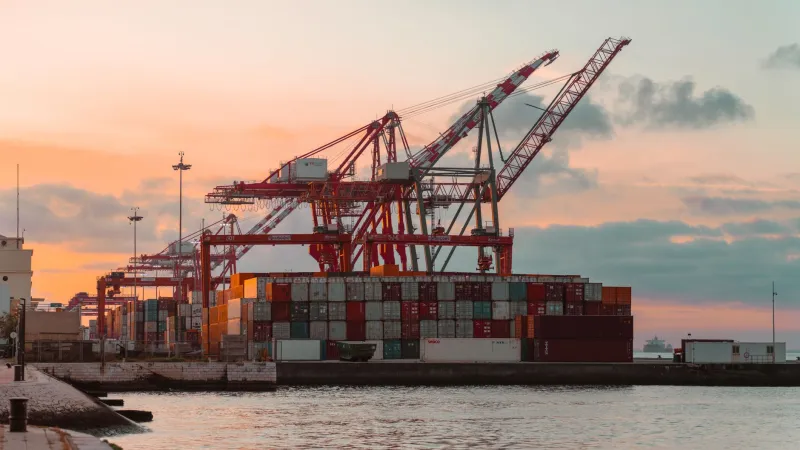
Somewhere between a port in Gujarat and a warehouse in New Jersey, a container of sev and chakli and roasted chana is sitting. Waiting. Nobody is entirely sure why, or for how long. The importer has been on the phone for three days. The store owner has stopped answering customer questions about when the shelves will be restocked. And somewhere in a suburb of Chicago, a woman named Priya is making do with a bag of generic trail mix and trying not to think about it too hard.
This is what a supply chain disruption looks like from the ground level. Not a headline. Not a logistics report. Just absence — the particular, hollow absence of something you didn't know you depended on until it was gone.
How Fragile Is This Network, Really?
The pipeline that brings Indian snacks to American homes is, by any honest measure, remarkably thin. Most imported Indian food products move through a small number of specialized brokers and importers who have cultivated relationships with manufacturers in India over many years. Unlike mass-market American snack brands, which typically have multiple domestic manufacturing sites and deep distribution redundancy, Indian snack imports often rely on a single overseas producer, a single freight forwarder, and a single port of entry.
When any link in that chain encounters a problem — a shipping rate spike, a port congestion event, a regulatory issue with labeling or ingredients, or a production disruption at the source — the entire supply can vanish almost overnight.
This isn't theoretical. The container shipping chaos of 2021 and 2022 hit Indian food importers particularly hard. Freight rates from India to the US West Coast quintupled in some cases. Small importers who couldn't afford to hold inventory or pre-book container space found themselves simply out of product for weeks or months. Stores that had never carried competing substitutes suddenly had empty shelves and confused customers.
"We had people calling us every day asking when things were coming back," recalls one importer based in the Dallas area who handles several popular Indian snack brands. "We didn't have good answers. We barely had any answers."
The Human Cost of an Empty Shelf
For Indian-American families, the disappearance of specific snacks from store shelves isn't a minor inconvenience. These products carry an emotional weight that's hard to quantify but impossible to dismiss. The tin of mixture that comes out at Diwali. The specific brand of khakhra that a grandmother brought from Ahmedabad and that her grandchildren now associate with her visits. The roasted mathri that a family in New Jersey has been eating every Sunday afternoon for fifteen years.
When these products disappear, families scramble. Some turn to online retailers, paying premium prices and waiting weeks for shipping. Some call relatives in India and ask them to pack snacks in checked luggage — a workaround that's technically legal in small quantities but logistically absurd as a long-term solution. Some simply go without, which sounds minor until you understand that "going without" means losing a small but meaningful thread of connection to home.
"It sounds dramatic to say a snack matters that much," says one member of a Chicago-area Indian community group. "But it's not really about the snack. It's about what the snack means. When you can't get it, you feel the distance more."
How Small Importers Navigate the Storm
For the men and women who actually run these import businesses, a supply chain disruption is an all-consuming crisis that involves equal parts logistics, customer service, and improvisation.
Some importers have responded by diversifying their supplier base — working with two or three manufacturers for the same product category so that a disruption at one facility doesn't wipe out the entire line. Others have invested in US-based warehousing to carry deeper inventory buffers, accepting the higher carrying costs as insurance against future disruptions. A few have begun exploring partnerships with Indian-American food entrepreneurs who manufacture locally — a hedge that also happens to open up a new product category.
None of these solutions are cheap. For businesses operating on thin margins in a niche market, building supply chain resilience often means choosing between financial risk now and operational risk later.
"Every importer I know has had to make that calculation," says the Dallas-based importer. "You can't afford to carry six months of inventory. But you also can't afford to be out of stock for six months. So you do your best and you hope."
What This Reveals About Dependency
The vulnerability of the Indian snack supply chain is, in miniature, a story about the broader fragility of global food networks. The pandemic made this visible in dramatic ways for mainstream American consumers — empty pasta shelves, chicken shortages, baby formula crises. For Indian-American communities, the lesson was the same but the stakes felt more personal.
There's a growing conversation within the industry about localization — whether more Indian snacks could be manufactured in the United States using imported ingredients or adapted recipes. Some brands are already doing this, with varying degrees of success. The authenticity question is real: a chakli made in New Jersey from local rice flour may be nutritionally identical to one made in Maharashtra, but it doesn't always taste the same, and it definitely doesn't carry the same story.
But as supply chains continue to face pressure — from geopolitical friction, climate-related agricultural disruptions, and shifting trade policy — the appeal of local production is growing. Not as a replacement for the real thing, but as a backup. A safety net. A way to ensure that the next time a container sits in a port waiting for clearance, the shelves don't have to go empty.
For now, Priya has found her chakli. A cousin drove an extra forty minutes to a South Asian grocery in a neighboring suburb that had gotten a shipment in. She bought four bags. Just in case.