Same Tin, Three Generations: The Quiet Power of Brand Loyalty in Indian Snack Culture
Photo: Pinakpani, CC BY-SA 4.0, via Wikimedia Commons
Same Tin, Same Brand, Three Generations Later: The Quiet Power of Loyalty in Indian Snack Culture
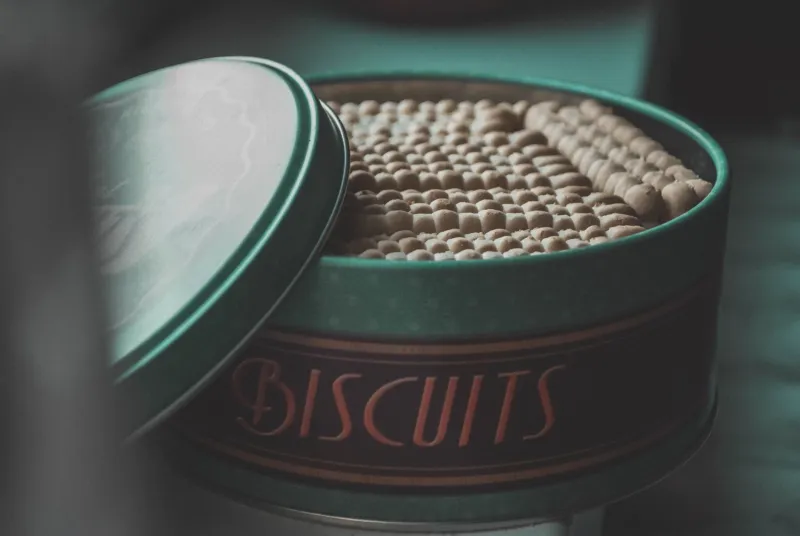
Sunita Mehta doesn't need to read the label. She knows the yellow tin the moment she sees it. Her grandmother brought it to her wedding in Ahmedabad in 1971. Her mother packed it into a suitcase when the family moved to New Jersey in 1994. And now, Sunita orders it online — same brand, same flavor, same satisfying crunch — for her daughter's college care packages in Boston.
"It's not even about the snack anymore," Sunita says, laughing. "It's about what the tin means."
This kind of loyalty isn't rare. Across Indian-American communities from Fremont to Flushing, families are holding tight to specific snack brands with a devotion that no amount of influencer marketing or flashy new packaging seems to shake. In a snack market that's more crowded and competitive than ever, some brands have quietly built something money can't easily buy: a permanent seat at the family table.
Why Nostalgia Is the Most Powerful Ingredient
Food psychologists have long known that taste memory is among the most durable forms of human recall. The olfactory system — the part of your brain that processes smell and flavor — connects directly to the hippocampus, the region responsible for long-term memory and emotional association. In plain terms: the snacks you ate as a kid get hardwired differently than almost anything else.
For Indian-Americans who grew up eating specific brands of murukkus, namkeen, or khakhra, those flavors don't just taste good — they feel like proof that something important was preserved. First and second-generation immigrants often describe the experience of eating a familiar brand as a kind of homecoming, even when home is thousands of miles and decades away.
"When I open a bag of the same sev my nani used to make us eat with chai, I'm not in Chicago anymore," says Rohan Pillai, a software engineer in his mid-thirties. "I'm in her kitchen in Coimbatore. For about thirty seconds, I'm completely somewhere else."
That emotional shortcut is extraordinarily difficult for a new brand to replicate, no matter how good the product.
Consistency Is a Promise Kept
But nostalgia alone doesn't explain everything. Plenty of beloved childhood brands fade because quality slips — cost-cutting, ingredient substitutions, recipe tinkering. The snack brands that survive across generations tend to be the ones that treat their original formula like a sacred document.
Devika Rao, who runs a small Indian grocery in the Atlanta suburbs, has watched customer behavior for over fifteen years. She's seen brands come and go, watched trendy newcomers get a burst of attention before disappearing. The brands with staying power, she says, share one thing in common.
"The taste doesn't change. Ever. My customers who grew up eating something in the 1980s can still pick it out in a blind taste test today. That's not an accident. That's a commitment."
For many legacy brands, that commitment is almost philosophical. Some manufacturers have publicly resisted pressure to modernize their recipes — refusing to reduce spice levels for broader appeal or swap traditional oils for cheaper alternatives — specifically because they understand that their core customers aren't buying a snack. They're buying reliability.
The Family Transmission Effect
What makes Indian snack brand loyalty particularly resilient is how it moves through families. Unlike a preference for a certain breakfast cereal or soda, which tends to get replaced as tastes mature, Indian snack preferences are often actively taught.
Grandmothers explain which brand of besan laddoo is "the real one." Fathers insist on a specific murukku maker during Diwali. Aunts correct younger relatives at the grocery store with the confidence of someone correcting a math error. The brand choice gets embedded in family identity rather than personal preference — and that makes it far stickier.
"My dad would genuinely be offended if I came home with a different brand of chivda," laughs Priya Krishnamurthy, a second-generation Indian-American in her late twenties. "Not angry, just — disappointed. Like I'd missed the point of something."
This intergenerational transmission creates a kind of informal brand advocacy that no marketing budget can fully replicate. When a grandmother recommends a brand, she's not an influencer. She's an authority.
New Competitors, Unmoved Loyalists
The Indian snack market in the US has exploded in recent years. Specialty brands, fusion startups, and even mainstream American food companies have launched products targeting South Asian consumers and curious food adventurers alike. The options on shelves — physical and digital — have never been greater.
And yet, the most loyal customers seem largely unbothered.
"I've tried the new stuff," Sunita Mehta says. "Some of it is honestly pretty good. But when I'm putting together a Diwali spread, or when I want something that feels like family, I go back to what I know."
That behavior tracks with broader consumer psychology research, which finds that in categories with strong emotional associations — comfort food being a prime example — brand switching rates are significantly lower than in purely functional categories. People switch laundry detergent. They don't easily switch the snack that reminds them of their grandmother.
What Legacy Brands Know That Newcomers Don't
The lesson for anyone entering the Indian snack space isn't necessarily to compete on nostalgia — that's a game that takes decades to win. It's to understand that for a meaningful segment of the Indian-American market, the purchase decision was made a long time ago, in a kitchen that no longer exists, by someone who is no longer around.
The brands that earned that loyalty did so by showing up consistently, tasting exactly right, and never getting too clever about it.
For Sunita, the math is simple. "My daughter texts me from Boston asking me to send the yellow tin. Not any tin. That one." She pauses. "I think my grandmother would have liked knowing that."