The Snack Box That Said Everything Words Couldn't
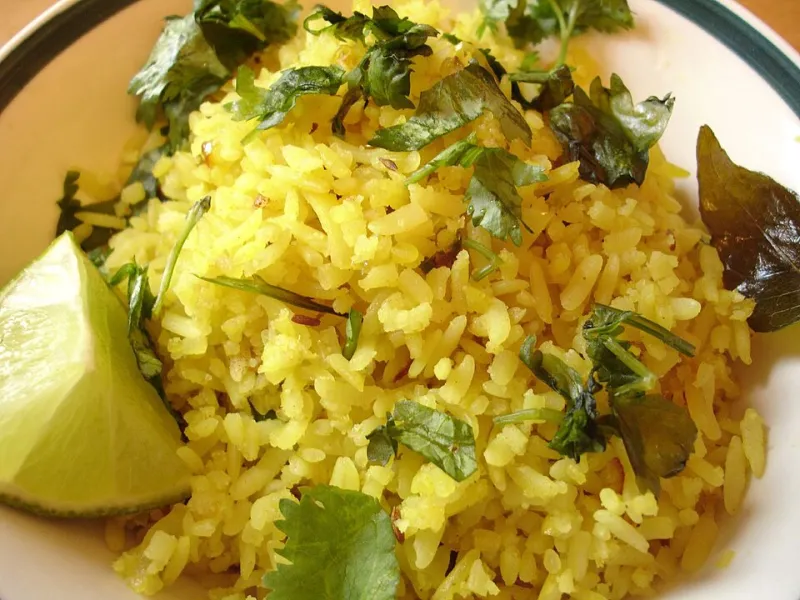
Photo: rovingI, CC BY 2.0, via Wikimedia Commons
Priya Nair was three weeks into her freshman year at the University of Michigan when the package arrived. It was a medium-sized brown box, and before she even opened it, she could smell it — the faint, familiar ghost of her mother's kitchen in Edison, New Jersey. Inside: two packets of her favorite chakli, a tin of the murukku her grandmother made specifically for her, a small bag of roasted peanuts coated in chili and lime, and a handwritten note that said, simply, We're thinking of you. Eat something.
"I cried," she says, laughing now. "Like, ugly cried. In the mailroom."
She's not alone. Across Indian-American communities in cities, suburbs, and college towns throughout the United States, a quiet but powerful phenomenon is reshaping how families stay connected across distances. Snack deliveries — ordered online, shipped overnight, sometimes carefully packed by hand and mailed from a family kitchen — have become one of the diaspora's most fluent love languages.
When a Package Means More Than Its Contents
The concept of food as communication isn't new. Every culture has its version of the care package, the dish brought to a grieving neighbor, the birthday cake that shows up on a doorstep. But within the Indian diaspora, snacks carry a particular emotional weight. They're tied to festivals, to grandmothers, to the smell of a house during Diwali, to after-school rituals that no amount of FaceTime can fully recreate.
"It's not about the snack itself," explains Meena Iyer, a first-generation immigrant and mother of two college-aged kids in Ohio. "When I send my son a box of thattai and ribbon pakoda, I'm sending him his childhood. I'm sending him something that says 'you belong somewhere, you come from somewhere.' That's not something you can do with a Venmo transfer."
Meena started ordering from online Indian grocery and snack retailers about four years ago, initially out of convenience. Then the pandemic hit, travel became impossible, and those boxes became a lifeline. She now schedules deliveries around her kids' exam weeks — stress packages, she calls them, timed to arrive when she knows they'll most need comfort.
The Milestone Shipment
For other families, snack deliveries have become a way to mark occasions that geography would otherwise erase. Weddings, job promotions, new apartments, first days of graduate school — events that would traditionally involve a gathering, a shared meal, a mother pressing homemade snacks into everyone's hands as they leave.
Rajan Pillai, who lives outside Chicago, describes the box his parents in California sent when he got promoted at work last year. "There was a whole selection — the good stuff, not the everyday stuff. Things from our region, from Kerala, that you just can't find at a regular Indian grocery in Illinois. My dad must have spent an hour putting it together. That box was the party we couldn't have."
The growing availability of specialty and regional Indian snacks through e-commerce has made this kind of gesture increasingly possible. It's no longer just the standard nationally distributed brands; families can now source hyper-regional items — the specific murukku from a particular state, the pickle that only exists in one community's culinary tradition — and ship them across the country with relative ease.
Grandparents in the Group Chat
Perhaps the most tender version of this phenomenon involves grandparents — often the least digitally fluent generation — finding ways to use snack delivery as a substitute for presence.
Sunita Mehta, who is in her late sixties and lives in the Dallas suburb of Irving, Texas, learned to navigate an online Indian snack retailer with help from her daughter specifically so she could send packages to her grandchildren in Boston. Her granddaughter, now twelve, has started calling her "Dadi Amazon" — a nickname that has apparently become a point of enormous pride.
"She doesn't know how to video call well," her daughter explains. "The camera is always pointed at the ceiling. But she figured out how to add things to a cart and check out, and she sends those kids something every month. My daughter knows her grandmother loves her because of those boxes. That's real."
For Sunita, the choice of what to send is deliberate and considered. "I send what they don't get anywhere else. The things that are from home. I want them to grow up knowing those tastes."
What E-Commerce Changed
It would be easy to frame this story as purely sentimental — and it is sentimental, genuinely so. But it's also a story about infrastructure. The emotional behavior described here was always present in these communities. What changed is the logistical possibility.
A decade ago, sending specific regional Indian snacks across state lines required either making them yourself, finding a traveling relative to carry them, or tracking down a specialty store that might or might not carry what you needed. Today, a parent in New Jersey can spend twenty minutes online and have a curated box of her daughter's favorite childhood snacks delivered to a Michigan dorm within two to three days.
That shift has made a particular kind of love more expressible. It's lowered the friction on a gesture that was always meaningful but used to require significant effort or luck to pull off.
"The technology didn't create the feeling," says Priya, now a junior who still gets her monthly box from home. "It just made it possible to act on it more easily. My mom always wanted to do this. Now she can."
The Box That Arrived Late
Not every story has a clean, happy shape. Sometimes the box arrives after the exam, or the tracking number shows delays, or the snacks that were supposed to taste like home taste slightly different from the ones that actually exist in memory. Distance is still distance.
But ask anyone who has received one of these packages — crouched over a dorm room floor, or standing in a cold apartment lobby, or sitting at a kitchen table far from everyone they grew up with — and they will tell you the same thing. The snack almost doesn't matter. What matters is that someone, somewhere, thought of them specifically enough to send it.
That's the thing about a box of murukku traveling from a kitchen in New Jersey to a mailroom in Michigan. It doesn't just carry chakli. It carries the message that home knows where you are, and home is thinking about you, and home will keep finding ways to reach you no matter how many miles are in between.