From Convenience Food to Craft: How Serious Food Culture Finally Caught Up with Indian Snacks
Somewhere between the third course of a tasting menu at a celebrated New York restaurant and the pages of a glossy food quarterly, something shifted. Indian snacks — long dismissed as background items in the immigrant grocery aisle — started showing up in conversations that used to be reserved for single-origin chocolate, small-batch hot sauce, and heritage grain bread.
Food critics started reaching for vocabulary that had never been applied to a bag of sev before. Words like terroir. Technique. Restraint. The kind of language that signals a food culture deciding, collectively, that something deserves to be taken seriously.
The shift didn't happen overnight, and it didn't happen by accident.
What 'Serious Food Culture' Actually Means
Before unpacking what changed, it's worth being clear about what we're talking about. "Serious food culture" — the world of professional critics, food journalism, culinary awards, and restaurant tasting menus — has always operated with a set of implicit hierarchies. Certain cuisines, techniques, and products get elevated into the conversation about craft and artistry. Others get sorted into the category of "interesting" or "authentic" or, most damning of all, "comfort food" — acknowledged but not analyzed.
For most of American food media history, Indian cuisine broadly — and Indian snacks specifically — landed in that second tier. Appreciated, even celebrated in certain contexts, but rarely subjected to the kind of rigorous, respectful scrutiny that a Burgundy producer or a Basque txoko might receive.
That's the wall that's currently coming down.
The Craft Snack Movement Built the Bridge
To understand why Indian snacks are being reconsidered, you have to look at what happened to the American snack category overall over the past decade.
The craft snack movement — driven initially by artisanal popcorn, small-batch jerky, and premium crackers — fundamentally changed how Americans think about snacking. It established that snacks could be the product of genuine skill, quality sourcing, and culinary intention. It created a consumer base willing to pay $8 for a bag of chips if the story and the flavor justified it.
That shift in consumer expectations created an opening. Once people started interrogating how their snacks were made, what was in them, and where the ingredients came from, the depth and complexity of traditional Indian snack-making had a new audience ready to receive it.
A murukku made with stone-ground rice flour and hand-pressed through a traditional mold is, by any craft standard, a more interesting and technically demanding product than most of what fills the snack aisle at a conventional supermarket. It just took American food culture a while to develop the frame to see it that way.
Critics Are Learning the Language
What's genuinely new in the last few years is the quality of attention being paid. Food writers who used to describe Indian snacks in broad, impressionistic terms — "spicy," "crunchy," "addictive" — are now doing the kind of deep-dive reporting that requires actually understanding what they're eating.
That means learning the regional distinctions: that Gujarati farsan has a different flavor logic than Telugu murukku, that the chickpea flour in a Rajasthani snack carries different cultural weight than the rice flour in a Tamil one. It means understanding that the spice blend in a good namkeen isn't just "Indian spices" but a precise, intentional composition that a skilled maker has spent years calibrating.
This kind of attention matters because it changes the story. When a food critic writes about chakli as a technically demanding product requiring specific flour hydration, precise extrusion pressure, and controlled fry temperature, they're making an argument about craft. And that argument has downstream effects on how the product is valued, priced, and perceived.
The Fine Dining Crossover
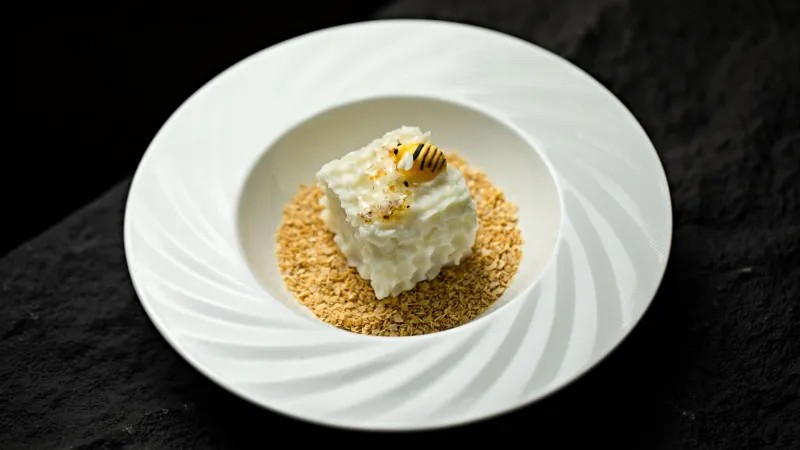
Some of the most interesting movement is happening at the restaurant level, where Indian-American chefs are incorporating traditional snack formats into tasting menu contexts in ways that force a reappraisal.
Imagine a single, perfect piece of papdi served as an amuse-bouche alongside a precise quenelle of whipped chutney and a microgreen garnish. Or a deconstructed bhel puri plated with the precision of a French sauce course. These presentations aren't gimmicks — they're arguments. They're chefs insisting, through the language of fine dining, that these flavors and techniques belong in the same conversation as anything else on a tasting menu.
And food media, when it covers these moments, is increasingly agreeing.
What This Means for Traditional Makers
Here's where the elevation story gets complicated. The growing critical recognition of Indian snacks as a craft category is genuinely good news for quality producers — but it comes with tensions worth naming.
The artisanal framing that food media tends to favor often centers on small-batch production, visible craft process, and premium positioning. Traditional Indian snack makers — many of whom have been doing this work for generations, at volume, with deep expertise — don't always fit that narrative neatly. The craft was always there. The storytelling infrastructure is newer.
There's also a real risk that "elevated" Indian snacks become a category unto themselves — premium, expensive, and disconnected from the everyday snacking culture that gave them meaning. A $22 tin of artisanal murukku sold at a specialty food boutique is a different product, in almost every meaningful sense, than the same snack bought from an Indian grocery store by a grandmother who knows exactly what she's looking for.
Both can coexist. But the elevation of one shouldn't come at the cost of dismissing the other.
The Bigger Shift
What the snack sommelier moment really represents — if we want to call it that — is American food culture catching up to something Indian food communities have always known. These snacks are not simple. They are not an afterthought. They carry centuries of technique, regional identity, and culinary intelligence in every bite.
The fact that it took food critics this long to notice says more about the limits of American culinary imagination than it does about the snacks themselves.
But the recognition is here now, and it's worth something. When the tastemakers start paying attention, markets follow. New audiences discover flavors they wouldn't have sought out otherwise. Traditional makers get the visibility and the revenue to keep doing the work.
And somewhere, a grandmother who has been making the same chakli recipe for forty years gets to hear, finally, that what she does is art.
She probably already knew. But it's nice when everyone else figures it out.