America Is Learning to Handle the Heat — and Indian Snack Makers Are Paying Very Close Attention
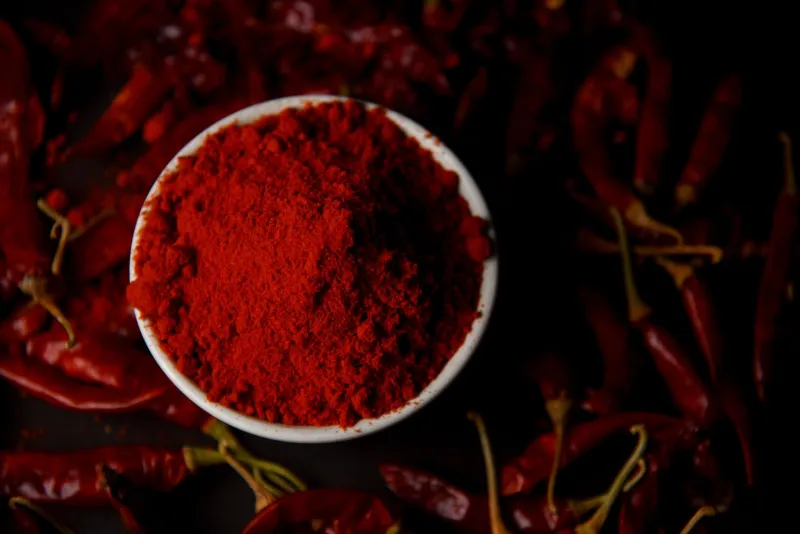
Not long ago, "spicy" in American snack culture meant buffalo sauce or maybe a jalapeño chip if you were feeling adventurous. Today, consumers are voluntarily seeking out ghost pepper salsa, gochujang-flavored popcorn, and snacks rated on Scoville scales like they're picking a wine vintage. Something has genuinely shifted — and the data is catching up to what many Indian food brands have been observing anecdotally for years.
The question now isn't whether American palates have evolved. They clearly have. The more interesting question is: how far does this go, and what does it mean for brands trying to bring authentic Indian snack flavors to a mainstream US audience?
What the Numbers Are Actually Saying
Research from Mintel and SPINS tracking snack purchase data over the past decade shows consistent growth in the "bold and spicy" flavor segment — one of the strongest performing flavor profiles in the entire salty snack category. A 2023 report from Technomic found that nearly 60% of American consumers now describe themselves as "liking" or "loving" spicy food, up from around 46% a decade earlier.
That's not a small shift. That's a generational reorientation.
Food scientists point to several converging factors. The rise of global cuisine in mainstream American restaurant culture — Korean, Thai, Mexican, Indian — has steadily recalibrated baseline expectations. Social media challenges built around extreme heat have normalized spice-seeking behavior, particularly among younger consumers. And the growth of the US Latino population, which has historically had a higher tolerance for and interest in chili-forward flavors, has reshaped the aggregate demand picture.
"The American palate isn't monolithic, and it never was," notes one food scientist who consults for several snack manufacturers. "What's changed is that the mainstream market is finally catching up to what a large portion of the population has always wanted."
Where Indian Flavors Fit In
Indian snack flavors occupy an interesting position in this landscape. Unlike the straightforward heat of a Carolina Reaper chip, Indian spicing is typically layered — cumin, coriander, amchur, black salt, chili, and a half-dozen other components working together to produce something that's complex before it's simply hot. That complexity is both an asset and a challenge.
For consumers newly curious about spice, Indian-flavored snacks offer an entry point that's flavorful without being punishing. Chaat masala, for instance, delivers a deeply savory, tangy experience with only moderate heat — a profile that tends to land well with shoppers who want "interesting" more than they want "scorching." Brands that have leaned into this distinction — marketing around flavor complexity rather than Scoville count — have generally found receptive audiences.
But the picture gets more complicated when brands try to bring hotter, more regionally specific Indian flavors to market. A snack built around the fiery, fermented heat of a Chettinad spice blend, for example, may have a devoted audience in Tamil Nadu but requires careful positioning for a consumer who's still figuring out what makes Indian food different from Mexican food.
The Product Development Tightrope
Brand developers working on Indian snack launches for the US market describe a consistent tension: how do you stay true to a flavor profile while making it accessible enough to move volume?
Some brands have adopted a tiered approach — launching a "classic" version of a product at moderate heat levels, then introducing a hotter variant once the base SKU has established itself. Others have invested in consumer testing, running focus groups that include both South Asian diaspora members (who provide authenticity benchmarks) and mainstream American consumers (who provide accessibility feedback). The goal is finding a formulation that satisfies both groups — which, in practice, is harder than it sounds.
"You lose something every time you pull back on the spice," says one brand developer who asked not to be named. "The question is whether what you gain in reach is worth what you give up in integrity. There's no universal answer."
Retailers are also part of this equation. Some grocery buyers actively push brands toward milder formulations, citing return data and customer complaints from previous hot-product launches. Others — particularly those serving markets with large South Asian or Latino populations — actively encourage authentic heat levels, knowing their customer base will respond.
Is There a Ceiling?
The honest answer is: probably yes, but we haven't hit it yet.
There are physiological limits to heat tolerance, and there's a meaningful portion of the American consumer base — older shoppers, those with GI sensitivities, families with young children — for whom very spicy snacks simply aren't an option regardless of how trendy they become. Heat as a trend also has a history of cycling — the ghost pepper craze of the early 2010s eventually cooled, though it left behind a permanently higher baseline.
What seems more durable than the extreme heat trend is the broader shift toward flavor complexity and global inspiration. Consumers who discovered gochujang and harissa and berbere aren't going back to plain salted chips. That appetite — for food that tastes like somewhere, that carries cultural context in its seasoning — is where Indian snacks have a long-term structural advantage.
The brands paying attention to this distinction, rather than chasing Scoville numbers, are likely the ones who'll still be on shelves in a decade.