How Indian Snack Brands Cracked the Code on America's Most Competitive Retail Real Estate
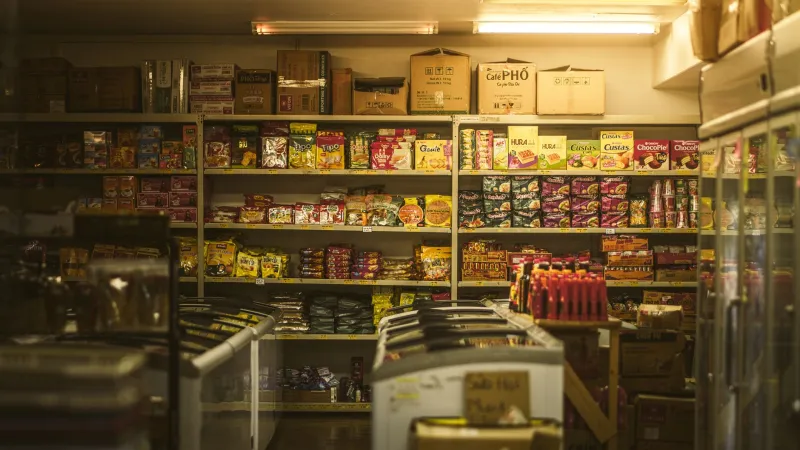
There's a moment every grocery buyer knows well. A sales rep walks in with samples, a pitch deck, and a story about why their product deserves precious shelf real estate. In most cases, the answer is no. Shelf space in a major American grocery chain is among the most fiercely contested territory in retail — and for years, Indian snack brands weren't even in the room where those decisions got made.
That's changing. Fast.
Over the past several years, a growing number of Indian snack brands have moved beyond the ethnic food aisle and into the main snack corridor — sitting alongside Lay's, PopCorners, and Kind bars. It didn't happen by accident. It happened because a handful of companies figured out exactly what grocery buyers want to hear, and then delivered on it.
The Gatekeeper Problem
Before a single bag of murukku or masala peanuts hits a mainstream shelf, it has to survive a gauntlet. Large grocery chains typically require brands to meet minimum volume guarantees, carry product liability insurance, offer slotting fees (yes, brands often pay for shelf placement), and demonstrate proven consumer demand. For a small Indian importer or a brand new to the US market, those requirements can feel like a wall.
"The system is built for brands that already have distribution," says one food industry consultant who has worked with several South Asian snack importers. "If you're starting from zero, you're essentially being asked to prove demand before you've had a chance to create it."
Some Indian brands solved this by starting smaller — natural food co-ops, specialty grocers, and South Asian supermarkets — and using that track record to build a data story. When a buyer at a regional Midwest chain can see that a product moved 400 units a week at a smaller independent store, the conversation changes.
What Buyers Actually Want
Grocery buyers are, at their core, risk managers. They want to know that a product will sell, that it won't come back as a return, and that the brand behind it can reliably restock shelves. Indian snack companies that have broken through have generally done one or more of the following: partnered with established US distributors who already have buyer relationships, leaned into trend data showing American appetite for global flavors, or repositioned their products using language that resonates with mainstream shoppers.
That last point matters more than it might seem. A bag labeled "Khakhra" means everything to a Gujarati grandmother and almost nothing to a shopper in suburban Ohio. Some brands have started leading with descriptors like "crispy lentil flatbread" or "spiced chickpea crisps," letting the Indian name live as a secondary identifier. It's not about erasing identity — it's about opening a door.
The rise of "better for you" snacking has also been a tailwind. Indian snacks frequently feature ingredients like lentils, chickpeas, rice flour, and seeds — a natural fit for shoppers scanning labels for protein and fiber content. Brands that have learned to speak that language while keeping the flavor profile authentic have found buyers considerably more receptive.
The Whole Foods Effect and What Came After
For many Indian snack brands, Whole Foods Market served as an early proving ground. The chain's willingness to carry international and specialty products, combined with its educated, adventurous customer base, created a relatively accessible entry point. A placement at Whole Foods became, over time, a kind of credibility signal — a stamp that made conversations with other retailers easier.
From there, the path to conventional grocery has widened. Kroger, which operates dozens of regional banners across the country, has been expanding its global snack offerings in response to demographic shifts in many of its markets. Walmart has similarly grown its selection, driven partly by data showing that multicultural shoppers represent a disproportionate share of grocery spending growth. Target's snack section has quietly become a showcase for emerging brands, Indian-origin products included.
None of this happened because grocery chains suddenly developed a passion for chaat. It happened because the numbers started making sense.
The Distributor Equation
One underappreciated factor in this shift is the role of broadline distributors. Companies like UNFI and KeHE — which supply thousands of independent and chain grocery stores — have become increasingly important channels for Indian snack brands looking to scale. Getting picked up by one of these distributors doesn't guarantee retail placement, but it dramatically lowers the friction.
Several Indian snack companies have pursued this route deliberately, treating distributor relationships as the actual goal rather than a means to an end. Once a product is in a distributor's catalog, individual store buyers can order it without a dedicated sales relationship — which means a brand can show up in a store in rural Tennessee without ever having made a single sales call there.
What This Means for the Snack Aisle
The cumulative effect of all this is visible to anyone paying attention. Walk through a mainstream American grocery store today and you're increasingly likely to find products made with tamarind, chili, cumin, and coriander sitting in the same section as pretzels and popcorn. The snack aisle is becoming a more honest reflection of what Americans actually eat — which, it turns out, is a lot more varied than the industry gave us credit for.
For Indian snack brands, the opportunity is real but the competition is intensifying. As the category grows, larger food companies are taking notice and developing their own globally inspired products. The window for authentic brands to establish themselves before the category gets crowded isn't infinite.
But for now, the shelf space is there. And the brands that figured out how to ask for it — on the right terms, with the right data, in the right language — are the ones eating it up.