Divided by Borders, United by the Snack Tin: How One Humble Treat Outlasted Partition
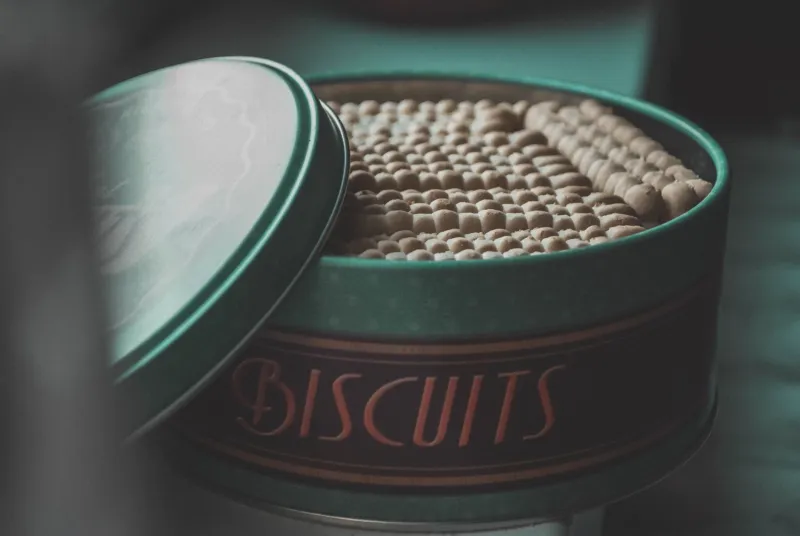
Somewhere in a suburb of Fremont, California, Parveen Anand keeps a battered steel tin on her kitchen counter. Inside: a batch of besan sev so heavily spiced with ajwain and black pepper that it makes your eyes water just lifting the lid. Her grandmother made it this way in Lahore. Her mother made it this way after 1947, in a cramped Delhi flat with a gas burner that barely worked. Parveen makes it this way now, in a zip code that would have been unimaginable to either of them.
"The recipe never crossed a border," she says, laughing softly. "It just... moved with us."
That's the quiet miracle hiding inside a lot of Indian snack tins. Foods like sev, mathri, and chakli don't carry passports. They don't care about the Radcliffe Line. And for millions of families scattered across the Indian-American diaspora — many of whom trace roots to regions that are now split between India and Pakistan — these snacks carry a weight that goes far beyond flavor.
A Food History That Predates the Map
To understand why certain snacks feel so loaded, you have to go back before 1947. The undivided subcontinent had a remarkably unified snack culture across what is now northern India and Pakistan. Lahori namkeen, Amritsari papad, the fried lentil crunch you'd find at any roadside stall from Rawalpindi to Ludhiana — these weren't regional curiosities. They were everyday food, shared across religious and ethnic communities.
Food historians like Dr. Colleen Taylor Sen, who has written extensively on South Asian culinary history, have noted that snack traditions in Punjab and Sindh were deeply communal. "Hindu, Muslim, and Sikh families in the same neighborhood were often eating the same things," Sen has observed in her research. "The snack stall was a democratic space."
Then came Partition. Families fled in both directions, carrying almost nothing — but often carrying recipes in their heads. The sev your great-grandmother made in Lyallpur became the sev her daughter made in Jalandhar. The mathri recipe that traveled in someone's memory from Multan to Jodhpur is still being made in New Jersey today.
"My Dadi Called It Pakistani Food. My Nani Called It Indian Food. It's the Same Recipe."
Raj Malhotra grew up in Edison, New Jersey, in a household that was, by his own description, "deeply confused about which side of history we were on." His father's family had roots in what became Pakistan. His mother's family was from Rajasthan. Both sides made chakli at Diwali. Both sides were convinced their version was the original.
"There was this whole thing every year about whose chakli was better," Raj recalls. "And then one time my aunt and my mom's aunt compared recipes side by side and they were nearly identical. Same rice flour ratio, same cumin, same technique. Everyone went quiet for a second."
That silence, Raj says, was complicated. It held grief, pride, and something else — a recognition that food had held on to a shared history that politics had tried to erase.
This experience isn't unique to his family. Across the Indian-American community, particularly among families with Punjabi, Sindhi, or UP roots, navigating the snack pantry can mean navigating a deeply personal geopolitical inheritance.
The Snack Makers Who Know the History
Some producers of traditional Indian snacks are quietly aware of this layered legacy. Small-batch makers and artisan brands — many of them run by first- and second-generation immigrants — often source their recipes from family archives that predate 1947. They're not always loud about it, but the knowledge is there.
One snack maker based in the Chicago area, who asked not to be named, told us that her family's namkeen recipe came from a handwritten notebook her great-grandfather carried out of Sialkot. "We've never changed it," she said. "Not one ingredient. It feels important to keep it exactly as it was."
For her, selling that namkeen in the US isn't just a business. It's a form of preservation — keeping something alive that could easily have been lost in the chaos of displacement.
When the Snack Aisle Gets Political
Of course, not everyone approaches this history with the same ease. For some Indian-American families, particularly those who experienced the violence of Partition directly through family stories, the idea that Pakistani and Indian snack traditions share a common root can feel uncomfortable. For others, it's a source of unexpected connection.
Social media has created new spaces for these conversations. TikTok and Instagram have seen Pakistani-American and Indian-American food creators discover, sometimes with visible surprise, that their nani's recipe and their dadi's recipe are the same dish. Comment sections get complicated fast — but they also get warm, funny, and occasionally deeply moving.
"Food is where the argument breaks down," says Fremont's Parveen Anand, who has watched her own sev recipe travel across community lines in California. "You can disagree about everything else. But if you're both reaching for the same tin, something is happening."
What the Snack Tin Actually Holds
The Indian-American pantry, stocked with products from sites like Shree Durga Snacks, is doing more cultural work than it might appear. Every time a family orders a batch of sev or mathri, they're participating in a living tradition that outlasted one of the most traumatic events in modern history.
That doesn't mean the history is simple. It isn't. Partition's wounds are still present in living memory for many families, and food can bring those feelings to the surface as easily as it can soothe them.
But there's something worth honoring in the fact that the snack survived. That the recipe traveled. That families on both sides of a border drawn in 1947 are still, in kitchens from Edison to Fremont to Houston, making something that tastes like home — even when they're not entirely sure which home they mean.
Parveen closes the lid on her tin and slides it back to its spot on the counter. "My grandmother would have been glad," she says, "to know the sev made it."