Fifteen Seconds to Sold Out: When Indian Snacks Go Viral and the Chaos That Follows

Photo: Doniyor Sharipov, Dilbar Rahmonova and others, CC BY-SA 3.0, via Wikimedia Commons
It started, as so many things do now, with a video.
Somebody's aunt tried a particular Indian snack on camera. She made a face — that specific face, the one that telegraphs oh, this is something else entirely — and the clip got shared, and then shared again, and then the algorithm got involved. Within 72 hours, the product had accumulated millions of views. Within a week, it was backordered across every platform that carried it. Within a month, three different brands had launched what were essentially copycat versions.
This is the new rhythm of the Indian snack market in America. And it's chaotic in ways that are equal parts exciting and exhausting for everyone involved.
The Anatomy of a Snack Going Viral
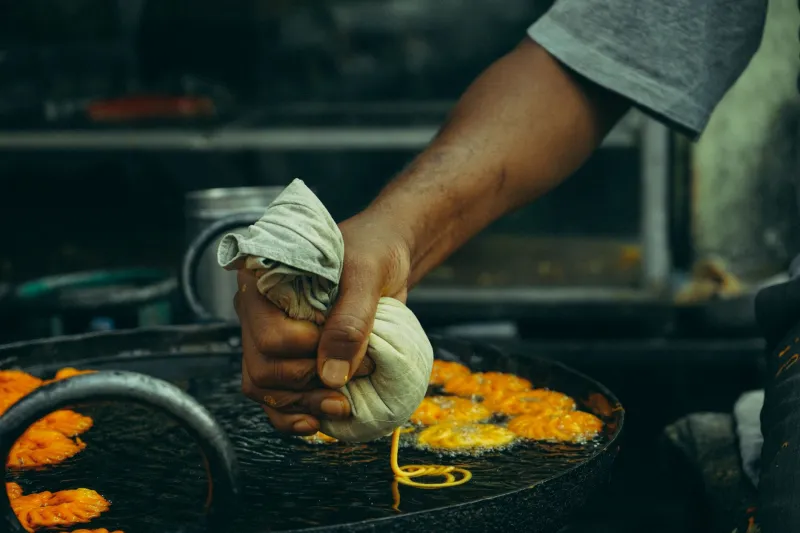
Not every Indian snack that circulates on social media becomes a phenomenon. The ones that break through tend to share a few characteristics: they're visually interesting, they have a memorable texture or flavor experience that's easy to convey on camera, and they're just unfamiliar enough to feel like a discovery without being so obscure that they're inaccessible.
Mango-flavored snacks have had multiple viral moments. So has anything involving tamarind, unexpected crunch, or an extreme spice challenge. The "reaction video" format — where someone tries something for the first time and films themselves — has been particularly powerful for Indian snacks, because the flavor profiles are genuinely surprising to people who haven't grown up eating them.
"Our product had been on shelves for eleven years," says one small-batch snack producer based in the Chicago suburbs who experienced a viral surge last year. "Steady sales, loyal customers, nothing dramatic. Then one video and suddenly we had more orders in a weekend than we'd done in the previous three months combined."
He pauses. "It sounds like a dream. It was also a nightmare."
The Supply Chain Scramble
Small and mid-size Indian snack producers are not, by and large, built for sudden scale. Their supply chains are calibrated for predictable, steady demand. Key ingredients — specific chili varieties, particular grades of besan, traditional spice blends — often come from specific suppliers who can't simply double their output on short notice. Production equipment has capacity limits. Packaging suppliers need lead time.
When a viral moment hits, all of that infrastructure gets stress-tested simultaneously.
"We ran out of our primary packaging within four days," the Chicago producer says. "We had product ready to ship and nothing to put it in. We were calling every packaging vendor we knew. It's not a problem you can solve with money alone — you need time, and time is the one thing you don't have."
Backorders pile up. Shipping estimates slip. And on social media, the comments sections of the original viral post start filling with frustrated messages from people who can't find the product anywhere. The viral moment, which should be pure upside, starts generating its own negative feedback loop.
Established Brands Fight Back
For larger, established Indian snack brands, the viral phenomenon presents a different kind of problem. When a smaller or newer product goes viral in a category they dominate, they face a choice: respond quickly and risk looking reactive, or hold their position and risk losing shelf space and mindshare to the newcomer.
Many established brands have developed rapid-response strategies specifically for this scenario. Social media monitoring teams track emerging trends. Existing products that fit the viral moment get promoted aggressively. In some cases, brands have accelerated product launches that were already in development, timing them to catch the wave of interest generated by a competitor's viral moment.
"We knew the category was getting attention," says a brand manager at a mid-sized Indian snack company who asked to remain anonymous. "We had a product in testing that was adjacent to what was going viral. We moved the launch timeline up by about four months. It was stressful, but it worked."
The Copycat Problem
Perhaps the most striking consequence of Indian snack virality is the speed at which copycat products appear — and the range of who's producing them.
Small domestic producers move fastest, often launching "inspired by" versions of viral products within weeks. They don't have the same regulatory and supply chain overhead as larger manufacturers, which means they can get something to market quickly even if quality control is inconsistent.
More significant, and more complicated, is the entry of mainstream American food companies into the space. Several large snack manufacturers have launched products clearly inspired by trending Indian flavors and formats — tamarind coatings, chaat-inspired seasoning blends, rice-based crunch formats that echo murukku — without necessarily acknowledging the tradition they're drawing from.
For Indian-American consumers and producers, this creates mixed feelings. On one hand, mainstream validation of flavors they've loved their whole lives feels like cultural recognition. On the other hand, watching a large corporation profit from a tradition without credit, context, or community connection is a different experience entirely.
"When a big American brand launches a 'tangy tamarind' chip after our products have been in Indian grocery stores for twenty years, I have thoughts about that," says one producer dryly.
What Virality Actually Changes
For all the chaos it creates, viral attention does produce some lasting effects on the Indian snack market. Products that survive their viral moment — that can meet the demand surge without collapsing under it — often come out the other side with a significantly expanded customer base. New consumers who discovered a product through social media become repeat buyers if the product delivers on its viral promise.
The Indian snack category as a whole benefits from increased mainstream visibility. Each viral moment normalizes these flavors and formats for American consumers who might not otherwise have encountered them, expanding the overall market.
And for small producers willing to do the hard work of building scalable operations before the next wave hits, the viral era represents a genuine opportunity — a chance to grow at a pace that would have been impossible before social media collapsed the distance between a great product and a national audience.
The aunt with the camera didn't plan any of this. She just really liked the snack.
Sometimes that's all it takes.