Chakli in the Communal Kitchen: Meet the College Students Running a Snack Hustle Between Classes
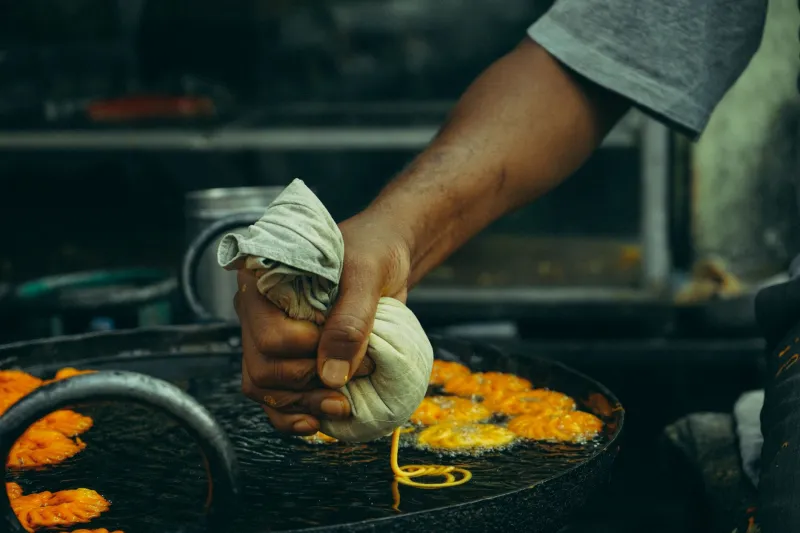
It started, as many great things do, with a care package and a craving.
When Meera Iyer arrived at the University of Michigan as a freshman, her mom sent her off with a Tupperware container of murukku — the spiral-shaped rice flour snack that Meera had eaten her whole life without giving it much thought. Within 48 hours, her entire floor had eaten it. Within a week, three people had asked if they could buy more.
"I called my mom and said, 'Can you teach me how to make this?'" Meera, now a junior, says. "And she laughed and said, 'Finally.'"
By October of her freshman year, Meera was waking up at 6 a.m. on Saturdays to use the communal kitchen before anyone else needed the stove. By November, she had a waiting list.
The Snack Gap Nobody Talks About
Leave home for college and you'll miss a lot of things. Indian-American students will tell you that the food gap hits differently — and specifically. It's not just that dining halls don't serve Indian food. It's that the particular snacks that punctuated daily life back home — the murukku with evening chai, the chakli at Diwali, the sev your aunt made and brought over in a steel dabba — simply don't exist in the campus ecosystem.
You can order some of it online. But packaged versions, even good ones, aren't quite the same as the real thing made by someone who learned the recipe from their grandmother. That gap — between what's available and what's actually wanted — turns out to be a business opportunity.
Across college campuses with significant South Asian student populations, from Rutgers to UC San Diego to the University of Illinois Urbana-Champaign, a loosely connected network of student snack entrepreneurs has emerged. Most operate through Instagram DMs, Venmo, and word of mouth. Almost none of them planned it this way.
The Instagram Storefront That Lives in a Group Chat
Priya Venkataraman runs what she calls a "very unofficial" snack operation out of her apartment near Ohio State. Her Instagram account, which she'd rather we not name, has around 800 followers — mostly South Asian students, a few non-Indian friends who got curious, and one professor who "somehow found it and has never once mentioned it in class, which I appreciate."
She makes thattai, a crunchy South Indian rice cracker seasoned with curry leaves and dried chilies, every two weeks. She sells out within a day, usually before she's finished packaging. A batch of 30 bags, priced at $6 each, disappears in hours.
"The demand is real," Priya says. "People aren't buying it to be nice to me. They're buying it because they actually want it and they can't get it anywhere else."
Her pricing is careful — she factors in ingredients, her time, and a small margin, but keeps it accessible for students on tight budgets. She's not getting rich. But she's covering her grocery bill, staying connected to her family's food traditions, and — not incidentally — feeding a community that's genuinely hungry for something specific.
Why Gen Z Is Reaching Back
There's a broader cultural current running through all of this. Gen Z, broadly speaking, has shown a strong appetite for authenticity — in food, in branding, in the stories behind what they consume. For Indian-American students specifically, that impulse intersects with something more personal: a generation that grew up watching their parents navigate assimilation is now actively choosing to reclaim the parts of their heritage that got quietly set aside.
Food is an accessible entry point. You don't need to speak fluent Tamil or Gujarati to make murukku. You do need to call your mom, though — and those calls, students say, have become some of the most meaningful conversations they're having.
"My mom was so happy when I asked her to walk me through the chakli recipe," says Arjun Mehta, a sophomore at Purdue who started selling snacks to his engineering cohort last fall. "She said she'd been waiting for me to ask for years. I think she thought I wasn't interested."
For many students, the snack business isn't really about the money. It's about keeping something alive — a recipe, a tradition, a sensory memory — in an environment that wasn't designed to hold it.
The Part Nobody Wants to Think About: Food Safety and the Gray Area
Here's where it gets complicated. Selling homemade food without proper licensing is, depending on the state, legally murky at best and outright prohibited at worst. Cottage food laws vary wildly across the US — some states are relatively permissive about shelf-stable, non-perishable items like dry snacks; others require commercial kitchen certification and labeling compliance.
Most of the students we spoke to are aware of this in a vague way. None of them have permits. All of them are operating on the informal trust economy of a campus community.
"I know it's a gray area," Meera says carefully. "I'm not making anything that needs refrigeration. Everything is dry, sealed, and shelf-stable. But I also know that's not the whole story legally."
Food safety advocates would note that even dry snacks carry allergen risks and require careful handling. The cottage food conversation is one that's worth having — not to shut these operations down, but to figure out how to support young food entrepreneurs who are clearly meeting a real demand.
Some students are already thinking ahead. Priya has been looking into her state's cottage food laws and is considering whether to formalize her operation after graduation. Arjun is taking a food entrepreneurship elective next semester. The snack hustle, for some of them, is turning into something bigger.
What This Means for the Broader Snack Ecosystem
The campus snack underground is a small thing in the grand scheme of the Indian food market. But it points toward something meaningful: a generation of consumers who want traditional snacks made with care, transparency, and a real story behind them — and who are willing to make those snacks themselves when the market doesn't deliver.
For established Indian snack brands and online retailers, that's worth paying attention to. Authenticity isn't just a marketing word for this cohort. It's a standard they're holding everyone to — including themselves.
Back in Ann Arbor, Meera is already planning her Diwali batch. Murukku, obviously. Maybe some besan ladoo if she can figure out the texture. She's been on the phone with her mom three times this week.
"She's very invested," Meera says, grinning. "I think she's living through me a little bit. Which honestly? I'm fine with."


